evidence.
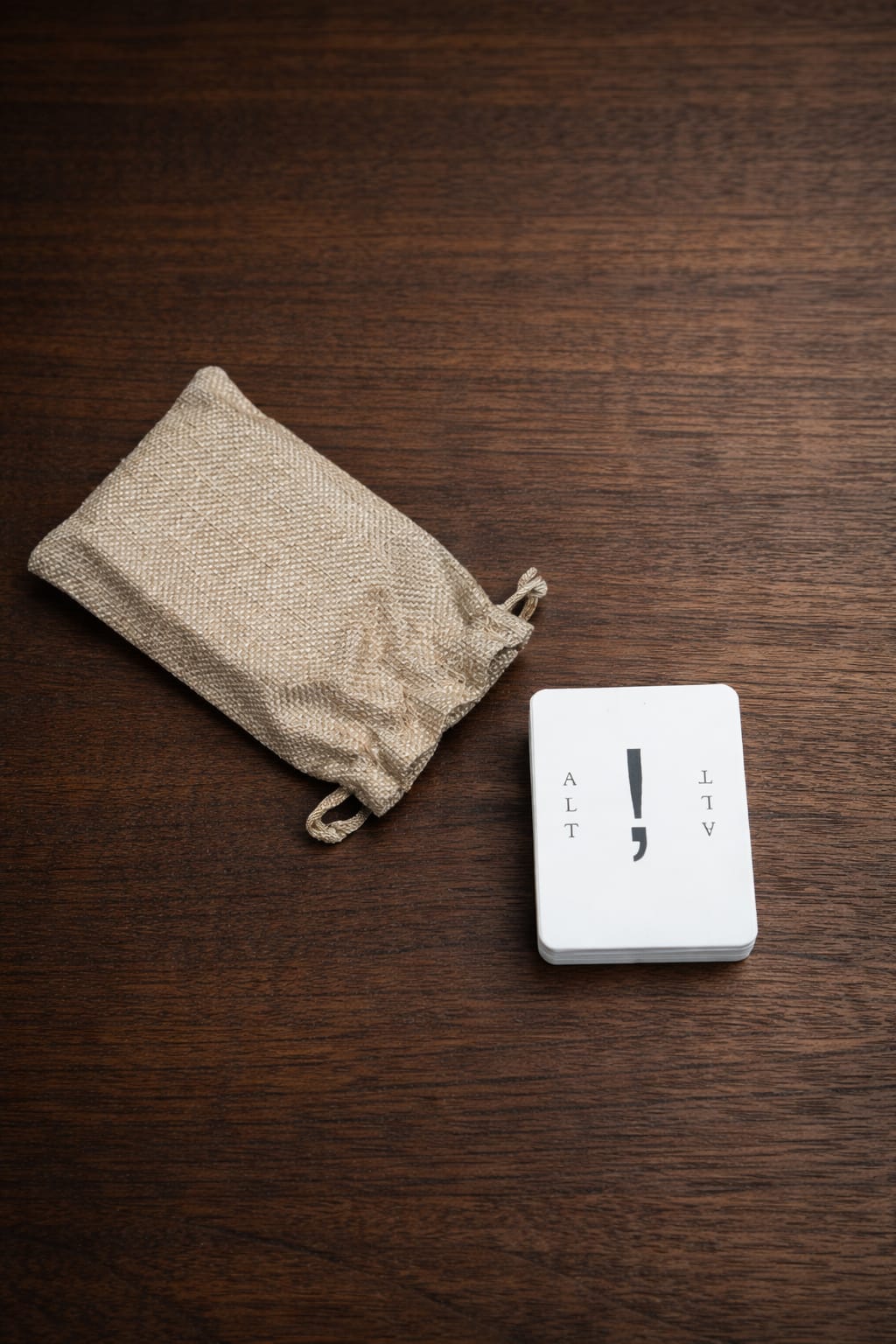
workshop to a
product.
The most important design decision in ALT was the win condition. A player does not win by collecting the lowest-impact cards. They win by achieving a score below 25 on both carbon and cost simultaneously, across a complete set of all five lifestyle categories.
This means a game can be won with a mix of high and low value cards, with a hand of average cards, or with consistently low ones. The game reflects the real world: sustainable living is not about perfection in one domain. It is about maintaining balance across the full surface area of a life.
This mechanic is grounded in behavioural economics research showing that framing sustainability as attainable balance rather than demanding sacrifice produces more durable attitude change and higher engagement.
ALT was tested across 225 individuals over an eighteen-month development period. The testing population was deliberately broad, spanning a wide range of ages, socioeconomic backgrounds, and levels of prior educational engagement with sustainability.
Qualitative outcomes across the testing cohort were consistently positive, with particular strength in four areas: awareness of sustainability trade-offs, strategic depth and replayability, willingness to play again, and deepening understanding through repeated play. The game was iterated in response to each testing phase before reaching its current form.
game-based and
competitive learning.